
Neighbourhood-scale batteries for the ACT
The ACT Government partnered with Evoenergy to explore neighbourhood-scale batteries for the ACT as part of the Big Canberra Battery project.
What are neighbourhood-scale batteries
Neighbourhood-scale batteries are energy storage systems larger than your typical household battery. Energy is stored in batteries that are connected to the electricity grid and typically have power capacities of up to 5 megawatts.
Neighbourhood-scale batteries store energy from the grid for use during peak demand or when there is low or no sunlight.
Some of the benefits of neighbourhood-scale batteries include:
- More access to renewable energy, especially in places where individual people can’t install their own solar panels.
- More capacity for rooftop solar and electric devices, like electric vehicles, to be connected without needing expensive network upgrades.
- Neighbourhood-scale batteries make the electricity grid stronger and allow it to handle more energy inputs from rooftop solar panels, reducing the need to limit solar exports.
- Cost savings that can be achieved through avoiding the need for big investments in traditional poles and wires.
- Improved network security during peak energy demand times such as in the evenings and early mornings.
What the ACT Government is doing
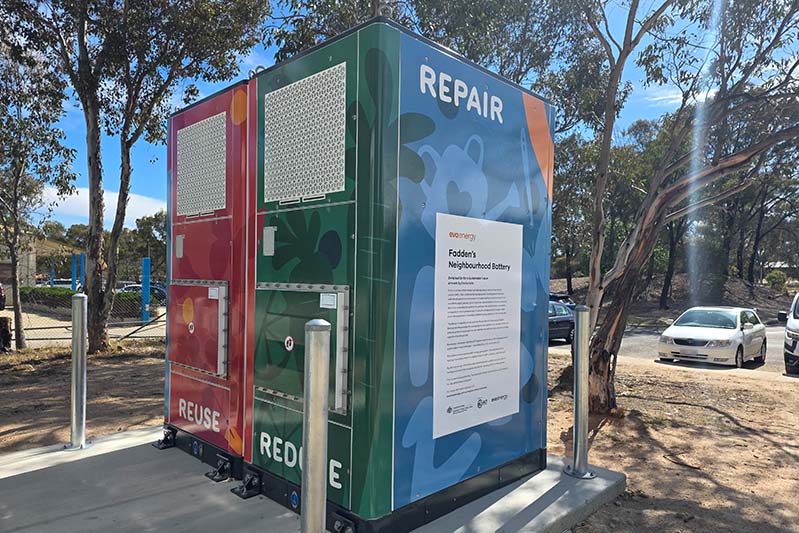
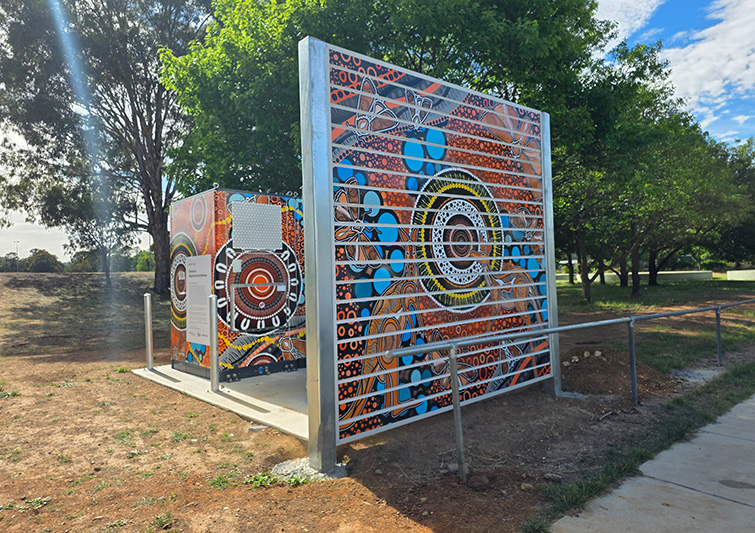
The ACT Government partnered with Evoenergy on a pilot project to install 3 medium-sized neighbourhood-scale batteries in Casey, Dickson and Fadden in the ACT. The pilot received funding from the Federal Government’s Community Batteries for Household Solar Program.
All three batteries are now operational. Together they have a combined power output of 550 kW and storage capacity of 1125 kWh.This is enough to serve approximately 47 Dickson homes, 86 Casey homes, and 1426 Fadden homes.
The operation of these three neighbourhood-scale batteries will help us learn more about how this type of battery works and how it can help the electricity network to make the best use of renewable energy and avoid costly network upgrades.
We are currently exploring more opportunities for neighbourhood-scale batteries across the ACT. These batteries will be installed in areas where they can help avoid the need for costly, large-scale network upgrades.
Battery details
| Location | Status |
|---|---|
| Casey | The Casey neighbourhood battery is located near John Crawford crescent and services up to 86 households connected to the sub-station adjacent to the battery. The battery has a storage capacity of 225 kWh and maximum power output of 110 kW. |
| Fadden | The Fadden neighbourhood battery is located near Fadden Primary on Hanlon Crescent and can service up to 200 local households. The battery will also improve the hosting capacity of the Beggs high voltage feeder, which services over 1400 households. The battery has a storage capacity of 450 kWh and maximum power output of 220 kW. |
| Dickson | The Dickson neighbourhood battery is located on Hawdon Place next to Dickson Oval and services up to 47 houses and units in the local area. The battery has a storage capacity of 450 kWh and a maximum power output of 220 kW. |

Why it’s important
As we electrify our city and move towards zero emissions by 2045, we know that the supply and demand for electricity across the city will change. We are likely to have increased demand as we plug in electric vehicles and switch from gas cooking and heating to electric.
We are also likely to have increased rooftop solar generation and household battery storage, as well as opportunities to store energy through emerging vehicle-to-grid technologies.
Having an ecosystem of different types of batteries across the ACT will help ensure that our electricity grid remains stable.
Related content
Find out more about how we’re electrifying our city and moving towards achieving net zero emissions by 2045.

Acknowledgement of Country
We acknowledge the Ngunnawal people as traditional custodians of the ACT and recognise any other people or families with connection to the lands of the ACT and region. We acknowledge and respect their continuing culture and the contribution they make to the life of this city and this region.