
ACT Climate Change Council
The ACT Climate Change Council provides advice to the Minister for Climate Change, Environment, Energy and Water on reducing greenhouse gas emissions and adapting to climate change.
The ACT Climate Change Council advises the Minister for Climate Change, Environment, Energy and Water on matters relating to reducing greenhouse gas emissions, building resilience and adapting to climate change. The ACT Government established the Council in 2011 under the Climate Change and Greenhouse Gas Reduction Act 2010. Find out more about the Council’s functions and membership in the Terms of Reference [239.1 KB].
The Council meets at least 4 times each year and produces an annual report of its activities that includes advice given to the Minister.
Meet your council

Dr Arnagretta Hunter is a consultant physician and cardiologist with skills in medicine, political science and communication. She is an academic and advocate working across clinical practice, health research and advocacy in public policy to address complex challenges particularly relating to climate change. Dr Hunter has worked in health and climate change for years with many public presentations, workshops and policy discussions as well as publishing articles and academic papers.
Dr Hunter is dedicated to understanding the health impacts of climate change, the advantages of working with communities on complex problems and the cobenefits of social change. Dr Hunter won the Sydney Sax medal (AHHA) as chair of Bushfire Impact Working Group in 2020 for contributions to public health in Australia. She has been the Human Futures Fellow at the Australian National University since 2020 and is a Churchill Fellow with work in narrative medicine.

Ms Madison (Casey) Barancewicz was appointed to the Council for her expertise in community engagement.
Ms Madison (Casey) Barancewicz was an active member of the ACT Youth Advisory Council from 2023 to early 2025. From there, she joined various other government and non-government organisations providing consultancy and lived experience knowledge. With her extensive experience in councils and reference groups, Ms Barancewicz has significant knowledge in engaging with the community on a variety of issues. With all her work, her passion lies with addressing climate change through effective mitigation, adaptation and action.
Ms Madison (Casey) Barancewicz was age 18 at the time of appointment to the Council, making her a key connection to the younger population. She is hardworking and motivated to make positive change, winning the Individual Community Service category of the Young Canberra Citizen of the Year Awards in 2024. She also won Young Volunteer of the Year by Volunteering ACT in 2024.

Associate Professor Bec Colvin is a social scientist with the Crawford School of Public Policy at the Australian National University. Bec conducts research on the social dimensions of climate policy and energy transition. Her research is focused on understanding the complexity of how different people and groups engage with social, policy, and political conflict about climate and energy issues, particularly through the theoretical lens of the social identity approach. She has explored conflict about wind energy, coal seam gas, coal, and climate policy and energy transition more broadly, in settings ranging from the public sphere through to local communities.
Bec is lead investigator on a 2022-2025 Australian Research Council funded Discovery Project that that seeks to understand the influence of ‘unconventional advocates’ – like farmers, business people, and political conservatives – on public opinion about climate policy, and holds a 2023-2026 Australian Research Council Discovery Early Career Researcher Award that aims to identify ways to establish constructive and community-led dialogue on regional futures in coal-producing areas.
At the Crawford School of Public Policy, Bec teaches courses on the role and practice of communication in climate and environmental policy, quantitative social research methods, independent research on climate policy. She previously served as Co-Convener of the Master of Climate Change and Convenor of the Graduate Certificate of Climate Policy. Bec is a non-executive member of the Board of EnergyCo, which is a statutory authority of the New South Wales Government appointed as infrastructure planner to design and deliver the state’s renewable energy zones and priority transmission infrastructure projects. Bec is on the editorial board of leading journal Environmental Research Letters and is a regular contributor to the media on issues to do with climate and energy.

Dr McFarlane is an Assistant Professor in Public Health, with the Health Research Institute and the Healthy Environments and Lives (HEAL) Global Research Centre at the University of Canberra (UC).
Dr McFarlane specialises in ecosystem services and the intersection of human, animal, and environmental health. She has an association with regional groups including Landcare and Catchment Management Associations, and with local food producers, bringing a practical, on-ground perspective in additional to academic expertise. She has multidisciplinary knowledge and experience in climate change, environment, health and community engagement.
Dr McFarlane lectures for the Master of Public Health and undergraduate courses at UC. She coordinates the ACT HEAL Community of Practice as part of a national network that bring together researchers, policy makers and community leaders aiming to identify evaluate and promote interventions that improve the environment and community health. She has worked with international organisations on multiple projects most recently the Intergovernmental Science Policy Platform for Biodiversity and Ecosystem Services (IPBES) assessing evidence and developing methodology to navigate best outcomes for health, climate, food, water and biodiversity.
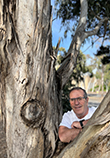
Stephen Mudford is a Ngunnawal man and Elder, a title of honour bestowed upon him by his family. His Ngunnawal name is Djibin. He is an active member of the Dhawura Ngunnawal Caring for Country Committee (DNCCC), the Multi Hazard Advisory Council (MHAC), and recently joined the ACT Climate Change Council (ACTCCC) as a sitting member.
Stephen has a deep commitment to caring for Country, climate change, and risk management, particularly in relation to activities on Ngunnawal land. He is a strong advocate for traditional fire management methods, promoting and practicing cultural fire techniques that have been used by his ancestors for thousands of years and passed down through generations of Ngunnawal Peoples for over sixty years.
His professional background includes a 36-year career with ActewAGL and its predecessor organisations, prior to his retirement in 2016. During this time, he served the ACT community as a Linesman, Supervisor, and Manager, contributing to the construction, maintenance, and repair of the electricity network across the ACT and parts of NSW. His work included bushfire management in sensitive areas such as National Parks and Nature Reserves, allowing him to care for Country in a practical and meaningful way.
Stephen remains passionate about advocating for the Ngunnawal Peoples and continues to lend his voice through participation in various forums and committees across the ACT.

Dr. Heinz Schandl holds a PhD in Sociology and an MA in Social and Economic Sciences. As a senior science leader at the Commonwealth Scientific and Industrial Research Organisation (CSIRO) in Canberra, he serves as the director of CSIRO’s Circular Economy Initiative. In this capacity he coordinates circular economy research endeavours.
Beyond his primary role at CSIRO, he is an adjunct professor at the Graduate School of Environmental Studies at Nagoya University in Japan. His affiliations extend to global platforms: he is a member of the United Nations Environment Program (UNEP) International Resource Panel, an expert member of the UNCRD Regional 3R and Circular Economy Forum for Asia and the Pacific, and a past president of the International Society of Industrial Ecology.
At the core of his research are themes like social theory, industrial metabolism, and environmental and sustainability policy. This expertise forms the backbone of his commitment to promoting evidence-based policies focussed on resource efficiency, waste minimization, greenhouse gas abatement, and the principles of the circular economy.

Professor Schirmer is the Director of the University of Canberra’s Centre for Environmental Governance, part of the Faculty of Business, Government and Law. She also leads the WellRes Unit, a team of researchers examining wellbeing and resilience of Australia’s communities, and is Chair of the UC Climate Change Adaptation and Resilience Research Network.
Jacki's research in recent years has focused on understanding wellbeing, resilience and recovery amongst communities experiencing cumulative extreme weather events and disasters, including drought, examining how to support climate change adaptation and resilience, and understanding the social acceptability and impacts of environmental and climate change-related policy and practice.
Within the ACT, Jacki leads the Living well in the ACT region survey, which tracks wellbeing and resilience of ACT residents as is used to inform the ACT Wellbeing Framework. She has also led the 2018 and 2023 Living well in the ACT with a changing climate studies which examined resilience of ACT residents to climate change.
Since 2013, her team have conducted the Regional Wellbeing Survey, an annual survey examining the views of 15,000 rural, regional and urban Australians about the liveability and resilience of their community, and their own wellbeing and resilience.

Dean Spaccavento is a prominent innovator in Australia's energy landscape and a cofounder and the CEO of Reposit Power. Under his leadership, Reposit Power has pioneered Grid Services participation from Consumer Energy Resources empowering and incentivising households to directly contribute to a more resilient, decarbonised grid. His groundbreaking work directly addresses the critical challenge of integrating Consumer Energy Resources into the national electricity market, enabling the transition to a sustainable energy future and showcasing Canberra's leadership in renewables, electrification and electricity storage.
Beyond his entrepreneurial work, Dean is a recognised leader in Consumer Energy Resource (CER) policy and regulation, bringing extensive experience from his involvement in shaping the future of distributed energy. This includes his role as Co-Chair of the Technology Council of Australia's Consumer Energy Technology Council. Driven by a deep commitment to climate action and the transformative power of technology, Dean is eager to contribute his comprehensive expertise in energy innovation, grid integration, CER policy leadership, and practical decarbonisation strategies to the Council's vital work, collaborating with fellow members and the broader community to solidify the ACT's position as a national and global leader in sustainable energy and climate resilience for future generations.
Council Observers
Ms Roslyn Brown is a Ngunnawal woman. Among numerous cultural advisory roles, Ms Brown is co-founder and serves as co-chairperson of the United Ngunnawal Elders Council, and founder and co-chair of the Ngunnawal Bush Healing Farm. Ms Brown has a strong Cultural commitment to reconciliation and improving the status and capacity of Aboriginal and Torres Strait Islander people in the ACT region. She advocates for the awareness and continuance of Aboriginal cultural practice and protocols. Through her various roles she has advocated for Aboriginal and Torres Strait Islander peoples on issues such as housing, justice, caring, disability and health and successfully lobbied to establish holistic health care, training opportunities and support structures for Indigenous people in the ACT. Ms Brown is employed as Elder in Residence at the University of Canberra, a member of the CIT Aboriginal and Torres Strait Islander Advisory committee and was an inaugural elected member of the ACT Indigenous Elected Body (ACTIEB). As a representative and advocate for many in the community, she has demonstrated her commitment to the Ngunnawal Land, Culture and the spirit of the People.
Council publications
- Climate Change Council Annual Report 2024-25 [7.0 MB]
- Climate Change Council Annual Report 2023-24 [4.9 MB]
- Climate Change Council Annual Report 2022-23 [1.4 MB]
- Climate Change Council Annual Report 2021-22 [10.1 MB]
- Climate Change Council Annual Report 2020-21 [3.1 MB]
- Climate Change Council Annual Report 2019-20 [5.9 MB]
- Letter from Council to Minister for Climate Change and Sustainability – Establishment of the Office of the ACT Landscape Architect - June 2025 [PDF 109KB]
- Letter from Council to Minister for Climate Change and Sustainability – Establishment of the Office of the ACT Landscape Architect - June 2025 [PDF 109KB]
- Letter from Council to Minister for Climate Change and Sustainability – January 2020 [PDF 154KB]
- Letter from Council to Stop Adani Canberra - November 2017 [PDF 325KB]
- Letter from Council to ACT Minister for Climate Change and Sustainability – advice on interim emission reduction targets - October 2017 [PDF 2.2MB]
- Response from the Office of the Prime Minister - April 2016 [PDF 595KB]
- Letter from David Thosey, CSIRO Chairman to Climate Change Council - March 2016 [PDF 106KB]
- Letter from Council to Prime Minister of Australia - February 2016 [PDF 1.0MB]
- ACT Climate Change Council - Meeting Summary - 17 Nov 2025 [197.8 KB]
- ACT Climate Change Council - Meeting Summary - 5 Sep 2025 [194.2 KB]
- ACT Climate Change Council - Meeting Summary - 19 June 2025 [234.7 KB]
- ACT Climate Change Council - Meeting Summary - 3 April 2025 [219.1 KB]
- ACT Climate Change Council - Meeting Summary - 17 Feb 2025 [184.8 KB]
- ACT Climate Change Council - Meeting Summary - 15 Oct 2024 [199.1 KB]
- ACT Climate Change Council - Meeting Summary - 13 Aug 2024 [158.0 KB]
- ACT Climate Change Council - Meeting Summary - 11 Jun 2024 [193.8 KB]
- ACT Climate Change Council - Meeting Summary - 2 Apr 2024 [190.5 KB]
- ACT Climate Change Council - Meeting Summary - 7 Feb 2024 [156.2 KB]
- ACT Climate Change Council - Meeting Summary - 5 Dec 2023 [176.2 KB]
- ACT Climate Change Council - Meeting Summary - 17 Oct 2023 [156.5 KB]
- ACT Climate Change Council - Meeting Summary - 15 Aug 2023 [156.2 KB]
- ACT Climate Change Council - Meeting Summary - 13 Jun 2023 [163.0 KB]
- ACT Climate Change Council - Meeting Summary - 11 Apr 2023 [158.1 KB]
- ACT Climate Change Council - Meeting Summary - 10 Feb 2023 [185.2 KB]
- ACT Climate Change Council - Meeting Summary - 14 Dec 2022 [184.3 KB]
- ACT Climate Change Council - Meeting Summary - 10 Nov 2022 [124.1 KB]
- ACT Climate Change Council - Meeting Summary - 8 Aug 2022 [150.1 KB]
- ACT Climate Change Council - Meeting Summary - 21 Jun 2022 [122.6 KB]
- ACT Climate Change Council - Meeting Summary - 19 Apr 2022 [118.3 KB]
- ACT Climate Change Council - Meeting Summary - 14 Dec 2021 [117.6 KB]
- ACT Climate Change Council - Meeting Summary - 8 Sep 2021 [117.8 KB]
- ACT Climate Change Council - Meeting Summary - 15 June 2021 [142.5 KB]
- ACT Climate Change Council - Meeting summary - 26 March 2021 [139.6 KB]
- ACT Climate Change Council - Meeting Summary - 11 Feb 2021 [117.2 KB]
- ACT Climate Change Council - Meeting summary - 17 December 2020 [109.6 KB]
- ACT Climate Change Council - Meeting summary - 8 September 2020 [132.1 KB]
- ACT Climate Change Council - Meeting summary - 30 April 2020 [110.6 KB]
- ACT Climate Change Council - Meeting summary - 13 January 2020 [109.4 KB]
- ACT Climate Change Council - Meeting summary - 3 January 2020 [124.9 KB]
- Advice on the new Climate Change Strategy [PDF 1.3 MB]
- Further Advice on the new Climate Change Strategy [PDF 221.6 KB]
- Cultural fire / fire regime management in the ACT [PDF 282.1 KB]
- Lithium batteries and an electrified Canberra [PDF 222.8 KB]
- A behavioural insights approach to net zero options for the ACT [PDF 1.8 MB]
- A behavioural insights approach to net zero options for the ACT - presentation [PDF 1.5 MB]
- ACT Climate Change Council submission on ACTs Emissions Reduction Target Review - September 2023 [PDF 1.7MB]
- The social cost of carbon and implications for the ACT - May 2021 - March 2021 [PDF 1.4MB]
- Learning from Canberra's Climate-fuelled Summer of Crisis - June 2020[PDF 8.7MB]
- Community Listening Report on Adaptation to Climate Crises: The Extreme Summer of 2019/20 [PDF 601KB]
- What is a Carbon Budget? [PDF 935KB]
- The social cost of carbon and public investment to reduce ACT greenhouse gas emissions - July 2018 [PDF 106.6KB]
- ACT Climate Change Council Net zero emissions precincts report - June 2018 [PDF 1.9MB]
- Climate-wise buildings workshop summary report - June 2018 [PDF 1.5MB]
- Climate Change 2016: a brief science update for the ACT [PDF 281KB]
- Sub National-Climate Change Policies - How does the ACT compare? [PDF 2.2MB]
- Sub National-Climate Change Policies - How does the ACT compare? - Part two: Data tables [PDF 2.2MB]
- Sub National-Climate Change Policies - How does the ACT compare? Infographic [PDF 390KB]
- Biogas and Biomethane Briefing Note [DOCX 290KB]
- Hydrogen Briefing Note [DOCX 1,889KB]
- Cooling the Heat Island: Building Heat Resilience into Canberra’s Urban Landscape [DOCX 261KB]
- Microplastics from Use of Post-consumer Plastics in Roads [DOCX 264KB]
- Presentation to Climate Action Subcommittee into Electrification and Equity - July 2023 [PDF 1.1MB]
- Submission on High-density Residential structures and sustainable infrastructure [PDF 965KB]
- Submission to the House Standing Committee on the Environment and Energy The Climate Change Bill 2020 [PDF 289KB]
- Submission to the ACT Urban Forest Strategy - September 2020 [PDF 215KB]
- Submission to the Royal Commission into National Natural Disaster Arrangements - April 2020 [PDF 234KB]
- Submission on the ACT Wellbeing Indicators - December 2019 [PDF 404KB]
- Submission to ACT Sustainable Energy Policy 2020-25 Discussion Paper - October 2019 [PDF 381KB]
- Submission on the ACT Draft Integrated Transport Strategy - April 2019 [PDF 272KB]
- Submission on the Weathering the Change Draft Action Plan 2 - March 2012 [PDF 94KB]
- Climate affects us all: ACT’s climate council responds to the climate emergency – Canberra Times – January 2020
- Community's role in a carbon-free Canberra - Canberra Times - April 2019
- We need to change the way we build Canberra homes - Canberra Times - March 2019
- Making the switch: What will Canberra's commute look like in the future? - March 2019
- Canberra must be greener to cope in a hotter future - Canberra Times - February 2019
- Can a growing city cut carbon emissions to zero? - Canberra Times - January 2019
Contact the Council
Council members are keen to engage with the ACT community.
The Council’s Community Engagement Strategy 2023 – 2026 sets out the Council’s approach to engaging with business and community, so their views can be reflected in the advice provided to the Minister. Implementation of this strategy includes an annual public online forum.
You can also raise an issue, invite us to attend a local event, or tell us about recent climate change news or research. Get in touch with us at:
- ClimateChangeCouncilSecretariat@act.gov.au
- Access Canberra on 13 22 81
You can write to us at:
ACT Climate Change Council
City and Environment Directorate
ACT Government
GPO Box 158
Canberra ACT 2601
Aboriginal and Torres Strait Islander dedicated positions
The Climate Change and Greenhouse Gas Reduction (Membership) Amendment Bill 2024 provides for the membership of the ACT Climate Change Council of at least two Aboriginal and/or Torres Strait Islander people.
- Recruitment for the second dedicated Aboriginal and/or Torres Strait Islander position continues, and the ACT Government will work closely with the local Aboriginal and Torres Strait Islander community to ensure this position is appointed in accordance with our legislative obligations. If you would like further information about this process, please email ClimateChangeCouncilSecretariat@act.gov.au

Acknowledgement of Country
We acknowledge the Ngunnawal people as traditional custodians of the ACT and recognise any other people or families with connection to the lands of the ACT and region. We acknowledge and respect their continuing culture and the contribution they make to the life of this city and this region.